Vietnam medical practice conditions 2024–2026
From 1 January 2024, the Law on Medical Examination and Treatment No. 15/2023/QH15 replaced the 2009 law and rewrote the architecture of medical practice. Decree 96/2023/ND-CP and Circular 32/2023/TT-BYT detailed the new conditions for both individual practitioners and establishments. From 1 January 2025 the three-tier system (initial / basic / specialised) replaced the old four-tier scheme, and from 1 July 2026 Resolution 21/2026/NQ-CP delegates practising licence authority from the Ministry of Health to the chairpersons of provincial People's Committees. A synthesis of the law text on the Government Portal and ThuVienPhapLuat, the implementing decree and circular, the delegation resolution, and analysis from kcb.vn, xaydungchinhsach.chinhphu.vn and LuatVietnam.
On 9 January 2023 the National Assembly passed Law 15/2023/QH15 — the new Law on Medical Examination and Treatment — which took effect on 1 January 2024 and replaced Law 40/2009/QH12 together with its later amendments. On 30 December 2023 the Government issued Decree 96/2023/ND-CP (9 chapters, 149 articles, 7 appendices) detailing the law, and on 31 December 2023 the Minister of Health issued Circular 32/2023/TT-BYT, which fixes the scope-of-practice tables for each professional title. The framework was supplemented in 2025 by the entry into force of the three-tier system for medical facilities (Article 104, effective 1 January 2025), and was further reshaped in 2026 by Resolution 21/2026/NQ-CP (29 April 2026), which from 1 July 2026 delegates licensing authority to provincial People's Committees. Reading these instruments together, the conditions for medical practice in Vietnam now sit on three layers — the individual practitioner, the establishment (hospital/clinic), and the legal entity (the company or other organisation behind the establishment).
Two licences, not one — the architectural split
Vietnamese medical-practice law has always distinguished two distinct authorisations and Law 15/2023 keeps that split, but renames and reframes both:
- Practising licence for medical examination and treatment — issued to the individual person performing medical acts. It is title-based rather than degree-based, and from 1 January 2024 has a five-year validity, with renewal conditional on continuous medical education (CME) and, in the new regime, on the national competency assessment organised by the National Medical Council.
- operating licence for a medical facility — issued to the establishment, whatever its legal form. It is form-based (one of the regulated organisational types in Article 48 of the law and Article 39 of Decree 96), and is conditional on premises, equipment, personnel and a designated person in charge of clinical practice.
A company — whether a joint-stock company, a limited liability company, a household business, a public service unit, or a foreign-invested entity — does not itself "practice medicine". It owns or operates the establishment that holds the operating licence, and it must engage individuals who hold a practising licence. The law treats the legal entity as the upstream container, with conditions imposed by adjacent regimes (Law on Enterprises 2020, Law on Investment 2020 for foreign-invested cases, and the relevant tax and social-insurance laws).
Layer 1 — conditions on the individual practitioner
Article 26 of Law 15/2023 lists ten professional titles that require a practising licence: (a) doctor, (b) assistant physician, (c) nurse, (d) midwife, medical technologist, (e) clinical nutritionist, (g) out-of-hospital emergency responder, (h) clinical psychologist, (i) traditional medicine practitioner, (k) holder of a family-inherited remedy or holder of a family-inherited treatment method. Note that assistant-physician enrolment is restricted to forces of the People's Armed Forces under the new law; civilian assistant-physician titles continue under the transition rules until expiry of the old certificate.
The core conditions on an applicant for an initial practising licence are:
- A diploma or qualification appropriate to the title — verified against the Ministry of Health's list of accepted training programmes.
- Completion of supervised practice at a recognised establishment, for a duration that depends on the title (typically 12 months for doctors, 9 months for assistant physicians, 9 months for nurses / midwives / medical technologists, shorter for nutrition and clinical psychology, with the detailed map in Decree 96 Chapter II).
- Health adequacy and good moral standing — no current criminal sentence, no current administrative ban on practice.
- For foreign nationals, Vietnamese-language proficiency under Article 21. The exceptions to the Vietnamese-language rule are narrow: same-mother-tongue patients, foreign patients, humanitarian medical missions, and short-form technology-transfer or expert-cooperation programmes between Vietnamese and foreign establishments. In all such non-Vietnamese cases, an interpreter must be engaged, and medical records must be kept in both the foreign language and Vietnamese.
The competency-assessment overlay — the timeline
Article 120 of Law 15/2023 assigns the running of the new national competency assessment to the National Medical Council. Article 121 (transitional provisions) staggers the obligation to pass that assessment as a precondition for the practising licence:
- From 1 January 2027 — doctors.
- From 1 January 2028 — assistant physicians, nurses, midwives.
- From 1 January 2029 — medical technologists, clinical nutritionists, out-of-hospital emergency responders, clinical psychologists.
Applicants who apply for a practising licence before their title's switch-on date are exempt from the competency assessment for that initial cycle. The window matters: doctors applying in 2026 are still under the certificate-based regime; those applying on or after 1/1/2027 must clear the national exam first. For traditional medicine practitioners and holders of family-inherited remedies / treatment methods, no national exam applies; provincial or ministerial evaluation councils continue to assess.
Five-year cycle and CME
Once issued, a practising licence is valid for five years. Renewal requires:
- Demonstrated compliance with the CME requirements specified by the Minister of Health for the relevant title.
- No outstanding administrative ban on practice.
- A short, document-based re-application — not a re-run of the competency exam, in the steady state — although the Ministry has flagged that this position may evolve once the first cohort comes up for renewal in 2029.
In effect, the five-year cycle replaces the previous lifetime certificate. Practitioners who hold a practising certificate issued under Law 40/2009 continue to be recognised until they next have to renew, at which point they convert into the new practising-licence scheme.
Layer 2 — conditions on the establishment
Article 48 of Law 15/2023, expanded in Article 39 of Decree 96/2023, enumerates the recognised organisational forms a medical-practice establishment may take. The principal forms are:
- Hospital (general or specialty hospital).
- Armed forces infirmary.
- Maternity home.
- Multi-specialty clinic.
- Single-specialty clinic, including general practitioner clinics, nursing clinics, midwifery clinics, medical-technology clinics, nutrition clinics, clinical psychology clinics and so on.
- Inter-specialty clinic and family-doctor clinic.
- Traditional medicine treatment room.
- Paraclinical service establishment (laboratory / imaging diagnostic service).
- Optical shop with vision testing.
- Commune health station.
- Out-of-hospital emergency service establishment.
- Family medicine establishment.
- Other forms designated by the Minister of Health.
Each form has its own set of conditions on premises, equipment, personnel and minimum scale, codified in Chapters III–V of Decree 96. Representative thresholds:
- General hospital — minimum 30 inpatient beds, minimum 50 m² of constructed floor area per bed, separate departments for emergency, examination, inpatient treatment, pharmacy, infection control, medical records and so on.
- Multi-specialty clinic — at least two single-specialty consultation rooms, of which the consultation rooms are at least 10 m² each; emergency room at least 12 m²; observation room at least 15 m² (≥ 5 m² per bed once the third bed is added).
- Single-specialty clinic — minimum 10 m² consultation room (plus separate technical / procedure rooms for the specialty).
- Paraclinical service establishment — minimum laboratory or imaging room per the technical service, with calibration and external quality control evidence on file.
Every establishment must have:
- A person in charge of professional and technical matters — the named clinical lead — who must hold a practising licence with a scope matching the establishment's principal practice and have at least 36 months of relevant clinical experience (54 months for certain hospital-tier positions).
- Sufficient practitioners by number and ratio for the approved scope (the staffing ratios are pinned by Ministry of Health in implementing instruments).
- Each practitioner who performs clinical work at the establishment must hold a valid practising licence registered for practice at that establishment (an individual may register at multiple sites, subject to the time-and-distance rules in Article 36).
- A list of approved techniques — the establishment can only perform what is on the approved list, and adding "special-category" techniques requires a separate approval procedure now delegated to provincial People's Committees under Circular 04/2026/TT-BYT.
The three-tier system
Article 104 of Law 15/2023, effective 1 January 2025, replaces the old four-tier scheme (central — provincial — district — commune) with three professional-competency tiers:
- Initial tier — outpatient care, primary health, community disease management, community rehabilitation.
- Basic tier — general outpatient and inpatient care; general practical training; organisation of continuous medical education.
- Specialised tier — specialised outpatient and inpatient care; advanced practical training; research; continuous specialised training; technology transfer to other establishments.
An establishment is placed in exactly one tier. If it can carry out the duties of all three tiers it is placed in the specialised tier; if it covers the initial and basic tiers it is placed in the basic tier. Placement is by four criteria: capacity of clinical services and scope, capacity to host practical medical training, capacity to provide technical support to other establishments, and capacity for medical scientific research. The tier is what determines a facility's role in the new health-insurance referral and payment architecture — replacing the geographically-anchored tier reference that the 2009 law inherited.
Layer 3 — conditions on the legal entity (the "company")
Law 15/2023 does not itself prescribe what corporate vehicle must hold the establishment; it speaks of "medical examination and treatment establishments" and reserves the practitioner relationship to the individual. The corporate-vehicle conditions therefore come from adjacent regimes:
- Vietnamese-domestic operators may use a joint-stock company (JSC), limited liability company (LLC), household business, cooperative, or, in the public sector, a public service unit. The legal entity's business-line registration must include the appropriate VSIC codes — typically 8610 (hospital services), 8620 (medical and dental practice), 8690 (other human health activities) — and the operating address registered for the business line must coincide with the establishment's premises.
- Foreign-invested operators must first hold an Investment Registration Certificate issued under Law on Investment 2020, then a corporate registration under Law on Enterprises 2020, before applying for the operating licence. Hospital services and clinics are listed as conditional business lines for foreign investors; foreign-ownership ratios and the form of investment are constrained by Vietnam's WTO commitments and by the annexes on market access conditions in the implementing decrees of the investment law. The licensing authority for foreign-invested medical establishments has historically been the Ministry of Health — but with the 1 July 2026 delegation under Resolution 21/2026/NQ-CP, provincial People's Committees are taking on most of these procedures.
- Public service units operating under the autonomy framework (Decree 60/2021/ND-CP) sit alongside private operators in the licensing system, but with separate rules on financial autonomy, asset management, and pricing of medical services under Article 110 of the law.
The corporate vehicle must also satisfy:
- Tax registration under the Law on Tax Administration.
- Social-insurance registration under the Social Insurance Law 2024 (Law 41/2024/QH15, effective 1 July 2025) for employed practitioners.
- Fire-safety acceptance under the Law on Fire Prevention and Fighting.
- Environmental clearance under the Law on Environmental Protection 2020 — for hospital-scale operations, a full environmental impact assessment; for clinics, an environmental commitment.
- Medical-waste handling per Circular 20/2021/TT-BYT.
Specialised regimes inside the law
Law 15/2023 codifies several practice regimes that previously sat in scattered instruments:
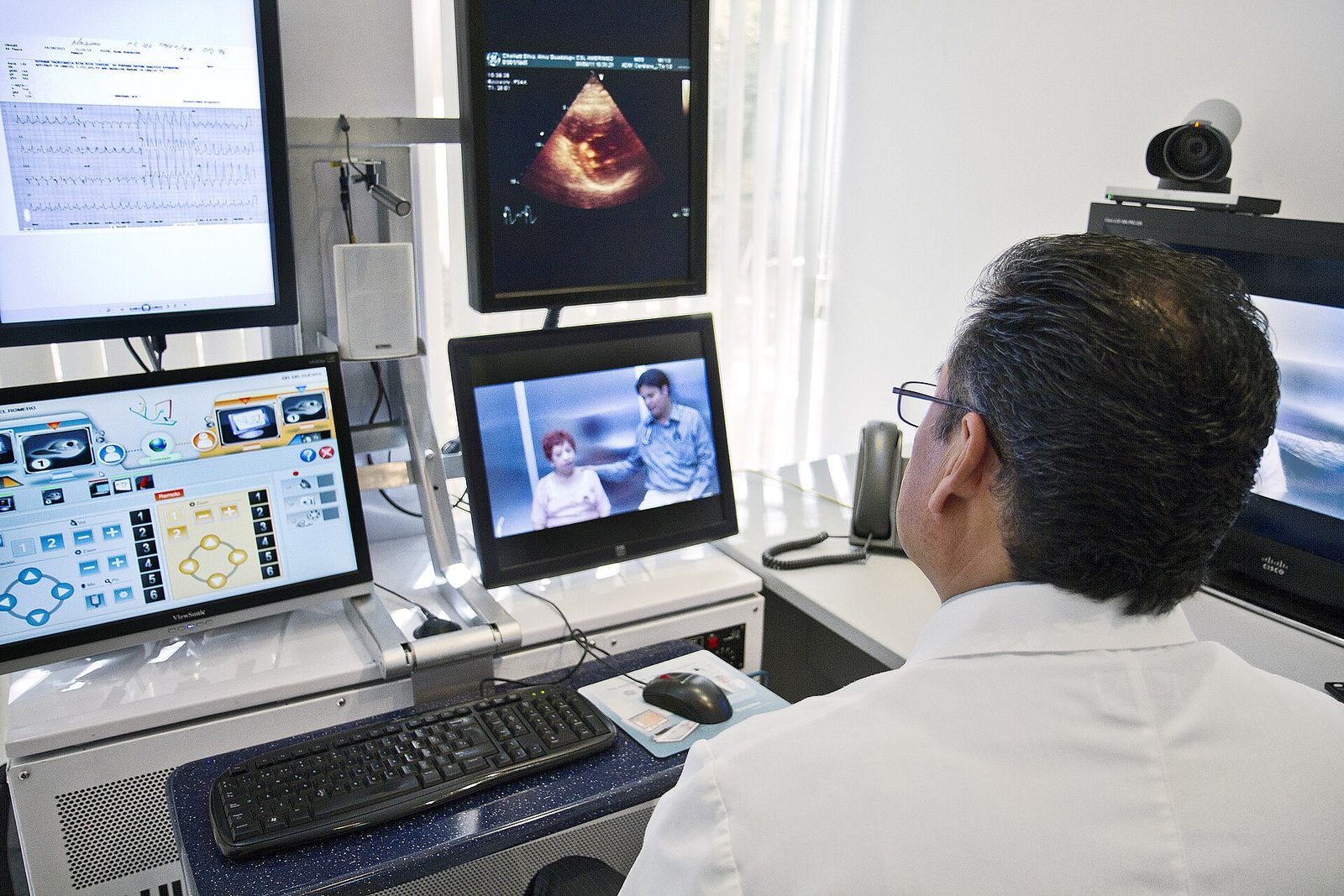
- Telemedicine — recognised as a regulated practice form, performed between licensed establishments and between an establishment and a registered practitioner; the establishment's operating-licence scope must include the relevant remote-care techniques.
- Mobile / outreach medicine — permitted under conditions on equipment, hygiene and supervision.
- Out-of-hospital emergency care — newly codified as a recognised establishment form, distinct from a hospital.
- Humanitarian / charitable medicine — special expedited procedures for foreign teams and short-term missions, with Vietnamese-language relaxation under Article 21.
- Family medicine — codified as a separate establishment form and as a recognised practitioner specialisation.
What changes on 1 July 2026 — Resolution 21/2026/NQ-CP
Resolution 21/2026/NQ-CP, issued on 29 April 2026, is the most consequential procedural change since the law took effect. From 1 July 2026:
- The Ministry of Health stops issuing practising licences to individual practitioners. The full lifecycle — initial issue, re-issue, renewal, adjustment, suspension, revocation — moves to the chairperson of the provincial People's Committee, who in practice will delegate the operational work to the provincial Department of Health.
- The delegation applies retroactively to practising certificates already issued under Law 40/2009 — those licences are now managed at provincial level.
- Statutory timelines tighten. New practising-licence applications must be assessed within 40 days of receipt, and the licence issued within 10 working days of the assessment report.
- The decentralisation runs in parallel with Circular 04/2026/TT-BYT (16 March 2026), which delegates the procedure for adding "special-category" techniques to provincial People's Committees for establishments outside Ministry of Health / Ministry of National Defence / Ministry of Public Security perimeter, and Circular 02/2026/TT-BYT, which amends the 2024 circular on the broader delegation of administrative procedures in the medical examination and treatment field.
- The resolution itself is transitional — effective 29 April 2026 through 1 January 2028 — and contemplates a follow-on instrument that may codify the new allocation more permanently.
Transition rules from Law 40/2009 to Law 15/2023
The bridge from the old regime to the new is structured around the validity of pre-existing documents:
- A practising certificate issued under Law 40/2009 remains valid until its holder applies for renewal or until the practitioner is required to convert under the staged competency-assessment timeline above. On first renewal, the document is reissued as a five-year practising licence.
- An operating licence issued under Law 40/2009 / Decree 109/2016/ND-CP remains valid; the establishment must apply for adjustment if its scope, address, principal premises or person-in-charge changes, and at that point it migrates onto the Decree 96 forms.
- Establishments must complete the placement procedure into one of the three tiers — guidance and acceleration instructions have been issued through 2025-2026 (see kcb.vn and the Ministry's directional notices).
- Foreign practitioners holding a practising certificate under Law 40/2009 keep that authorisation pending renewal, but at the next renewal they fall under the Vietnamese-language conditions of Article 21.
Practical checklist — what businesses, hospitals/clinics and individuals should do now
For individual practitioners
- Audit your CME hours and your re-application date against the five-year cycle. If your old practising certificate does not have an expiry date, your effective expiry is the first event that triggers renewal (change of practice scope, change of registered establishment, voluntary renewal).
- If you are a doctor planning to take the national competency assessment, work to the 1 January 2027 switch-on. The National Medical Council's preparatory materials are circulated through ump.edu.vn and the major medical universities.
- If you practise at more than one site, re-check the multi-site registration in Article 36 — distance, time, conflict-of-interest and informed-consent rules.
- If you are a foreign practitioner, treat the Vietnamese-language annexes of Decree 96 as the practical reference for your renewal; the exception list is not as broad as the marketing language sometimes suggests.
For hospitals and clinics
- Confirm your tier placement under Article 104. Until placement is complete, the health-insurance referral path and reimbursement coefficients remain on the legacy mapping.
- Re-check the list of techniques approved at your establishment against the current scope and against what your practitioners are actually doing. Discrepancies are now the most common DAV/provincial Department of Health inspection finding, and the Circular 04/2026 special-technique addition path is the procedural fix.
- Re-paper the person in charge of professional and technical matters: the new law fixes the minimum experience requirement and the named-person-in-the-licence rule more strictly than the 2009 instruments.
- Map your practising-licence portfolio against the 1 July 2026 delegation date. Documents already in flight to the Ministry of Health before 1 July 2026 will be handled under transitional rules; new submissions from that date go to the provincial People's Committee.
- Run a gap analysis against Decree 96 Chapter III–V on premises and equipment. Findings here are the cheapest to remediate before a scheduled inspection.
For companies and corporate operators
- Confirm that your business-line registration covers the establishment's actual scope — VSIC 8610 / 8620 / 8690 is the usual map, and missing codes are a common reason operating-licence adjustment dossiers are returned.
- If you are a foreign-invested operator, refresh your Investment Registration Certificate scope to match the establishment's practice scope; market-access conditions and ownership ratios can be re-tested by the licensing authority on any material change.
- Reconcile your public-pricing structure with Article 110 of Law 15/2023 and the implementing pricing guidance — the autonomy regime tightens the disclosure requirements.
- Check downstream compliance: the Social Insurance Law 2024 (effective 1 July 2025) and the upcoming Health Insurance Law 51/2024/QH15 sequence affect employment, contributions and referral payments for practitioners working under your establishment.
Direction of travel — from licence-as-permission to licence-as-quality-loop
Read together, Law 15/2023, Decree 96, Circular 32, the tier-system entry into force on 1 January 2025 and the 1 July 2026 delegation under Resolution 21/2026 move Vietnam's medical-practice regime from a static "permission to operate" model towards a quality-loop model — five-year practitioner licence, national competency assessment, formalised CME, tier-based facility placement, decentralised administrative oversight, and a more explicit corporate-side compliance perimeter (investment, tax, environment, fire safety). For multi-site operators and foreign-invested entities, the practical answer is to treat 2026 as the year to refresh the entire licence stack, because the delegation to provincial People's Committees changes both the counterparty and the cadence of every interaction with the regulator.
Sources
- National Assembly — Law on Medical Examination and Treatment No. 15/2023/QH15 (9 January 2023; effective 1 January 2024), full text via the Government Portal (xaydungchinhsach.chinhphu.vn) and ThuVienPhapLuat.
- Government — Decree 96/2023/ND-CP (30 December 2023) on the detailing of several articles of the Law on Medical Examination and Treatment.
- Ministry of Health — Circular 32/2023/TT-BYT (31 December 2023) detailing several articles of the Law, including scope-of-practice tables.
- Government — Resolution 21/2026/NQ-CP (29 April 2026) on cutting and decentralising administrative procedures in the health sector.
- Ministry of Health — Circular 04/2026/TT-BYT (16 March 2026) on delegation of special-technique addition procedures.
- Ministry of Health — Circular 02/2026/TT-BYT and Consolidated Text 10/VBHN-BYT (2026) on delegation of administrative procedures in the medical examination and treatment field.
- Ministry of Health — Decision 658/QD-BYT and Decision 966/QD-BYT (2026) publishing the updated administrative-procedure list.
- Medical Services Administration (kcb.vn) — guidance on tier placement and on the Decree 96 implementing path.
- Law 40/2009/QH12 and Decree 109/2016/ND-CP — superseded but referenced in transition.
- Law on Investment 2020 (Law 61/2020/QH14), Law on Enterprises 2020 (Law 59/2020/QH14), Social Insurance Law 2024 (Law 41/2024/QH15), Law on Environmental Protection 2020 — adjacent regimes shaping the corporate layer.
- LuatVietnam, ThuVienPhapLuat, baochinhphu.vn, suckhoedoisong.vn, kcb.vn — analytical coverage of the new framework and the 2026 delegation.