
Foreign acquirers reshape Vietnam pharma manufacturers: 2023–2026 deal review
Livzon's 64.81% takeover of Imexpharm is the largest deal in a longer foreign-acquisition cycle that also touches Dược Hậu Giang, Domesco, Pymepharco, Traphaco, Dược Hà Tây, and Trung Sơn Pharma — shaped by EU-GMP capacity, hospital-tender economics, and Vietnam's foreign-distribution rules.
Overview: Vietnam's pharmaceutical sector has been one of Southeast Asia's most consistent foreign-M&A targets for almost a decade, but the pace and scale of cross-border deals accelerated meaningfully between 2023 and 2026. The headline transaction of the current cycle is Livzon Pharmaceutical Group's acquisition of a controlling stake in Imexpharm — the largest publicly announced foreign buyout of a Vietnamese drug manufacturer to date. The deal sits within a broader pattern: Vietnam's top-ten listed pharma issuers are now substantially or fully foreign-controlled, with strategic shareholders drawn from Japan, South Korea, the United States, Germany, and now China.
This article catalogues the major transactions of the 2023–2026 cycle, places them within the longer arc of foreign acquisitions that began in 2016, and unpacks the structural and regulatory forces driving the trend.
Headline deal — Livzon (China) → Imexpharm, 2025–2026: On 22 May 2025, Livzon Pharmaceutical Group Inc. — a Hong Kong- and Shenzhen-listed manufacturer headquartered in Zhuhai — announced through its Singapore-incorporated subsidiary Lian SGP Holding Pte. Ltd. a tender offer for approximately 64.81% of Imexpharm Joint Stock Company (HoSE: IMP). The headline value of the deal is over VND 5,730 billion, equivalent to roughly USD 220.6 million at prevailing rates; subsequent Vietnamese coverage reports the final outlay closer to VND 6,000 billion after the offer was raised to 1.85 billion CNY mid-process (MarketScreener; Tuổi Trẻ).
- The principal seller was SK Investment Vina III Pte. Ltd., the Singapore vehicle of South Korea's SK Group, which had held 47.69% of Imexpharm since 2020 and used the transaction to exit its Vietnamese pharma investment.
- Livzon extended the tender deadline to 30 June 2026 to allow Vietnamese merger-control clearance and clarified the antitrust conditions in subsequent filings (TipRanks).
- Strategic rationale: Livzon's foreign revenue reached roughly 15% of group sales in 2024; the Imexpharm transaction is its largest single overseas acquisition and the entry point for a broader ASEAN strategy.
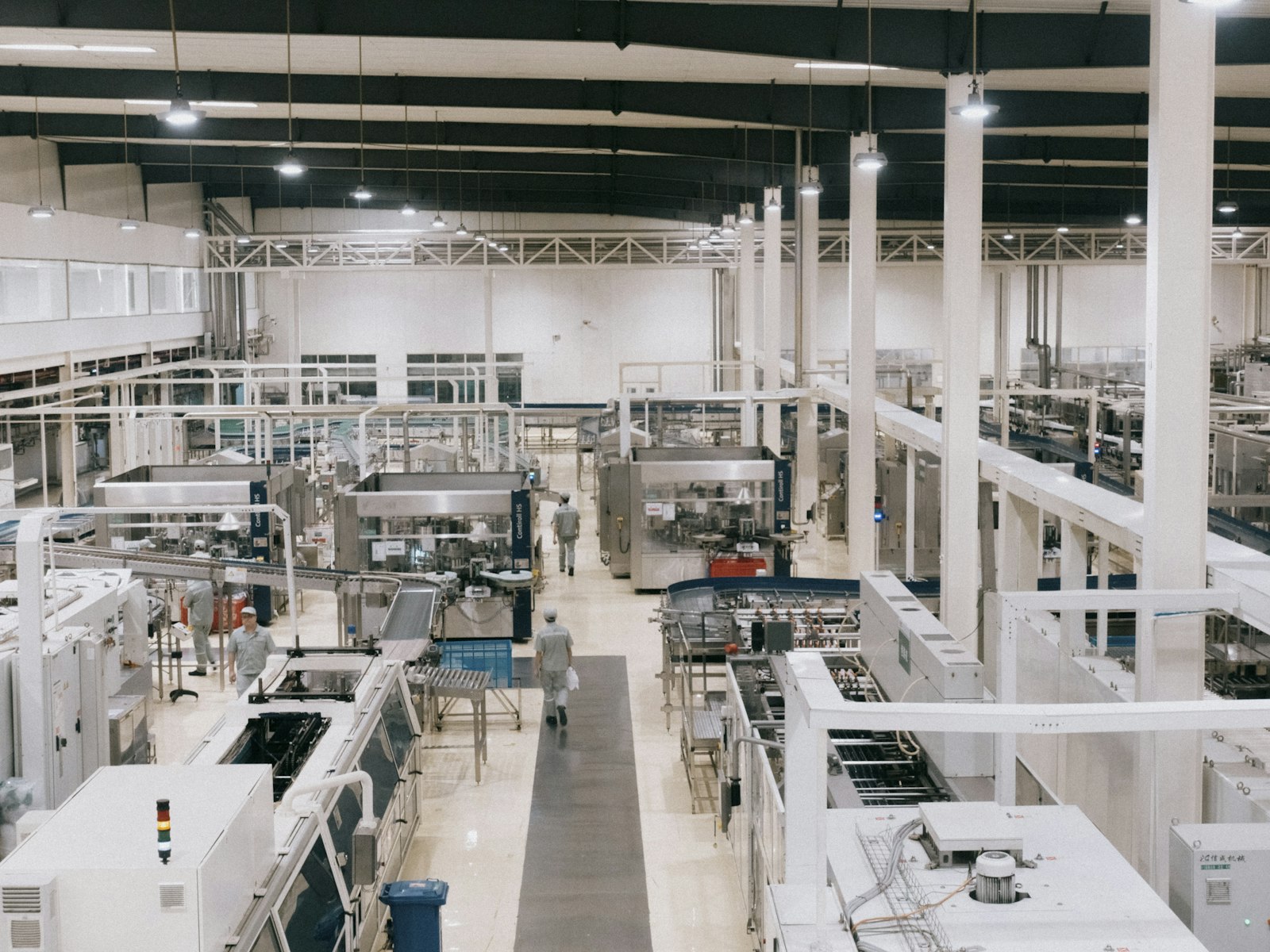
- Target profile: Imexpharm was founded in 1977 and is among Vietnam's leading generic-antibiotic manufacturers, operating twelve EU-GMP-certified production lines — the largest such footprint in Vietnam. It commands roughly 10% of the domestic antibiotic market. FY2024 revenue was VND 2.2 trillion (+11% YoY), with net profit of VND 320 billion.
- Significance: this is the first large-ticket Chinese acquisition of a leading Vietnamese drug manufacturer and signals a more active Chinese strategic-buyer presence in Vietnam's pharmaceutical landscape (Yicai Global; The Investor).
Other 2023–2026 transactions: A handful of additional deals — smaller in headline value but strategically significant — round out the 2023–2026 cycle.
- 2023 — Dongwha Pharm (South Korea) → Trung Sơn Pharma: Dongwha announced the acquisition of a 51% controlling stake in Trung Sơn Pharma, a Mekong-Delta-headquartered pharmacy retail chain with more than 140 outlets at the time of the deal. The transaction extended Dongwha's distribution presence in Vietnam beyond product partnerships and underscored Korean buyers' interest in downstream retail networks (The Investor).
- 2024–2026 — Follow-on consolidation: Several existing foreign strategic shareholders have continued to build out their positions. ASKA Pharmaceutical (Japan) has progressively increased manufacturing-partnership commitments at Dược Hà Tây (HoSE: DHT), and several Korean institutional investors have rotated holdings across the listed pharma cohort. These moves are typically below the disclosure thresholds for headline announcements but materially shift effective foreign control (Tuổi Trẻ; VCCI).
Pre-2023 deals — context for the current wave: The 2023–2026 cycle is the continuation, not the beginning, of foreign acquisition activity in Vietnamese pharma. The major earlier transactions are:
- 2016 — Abbott Laboratories (USA) → Domesco (DMC): Abbott, via its Chilean subsidiary CFR International Spa, acquired 51.7% of Đồng Tháp-based Domesco, becoming the first global big-pharma player to take majority control of a Vietnamese listed manufacturer.
- 2019 — Taisho Pharmaceutical (Japan) → Dược Hậu Giang (DHG): Taisho completed its accumulation to more than 51% of Dược Hậu Giang, Vietnam's largest listed pharmaceutical company by market capitalisation. The total outlay across multiple tranches is estimated at ~VND 7,000 billion. Taisho's strategy centred on leveraging DHG's OTC distribution scale across the Mekong Delta and southern Vietnam.
- 2021 — STADA Arzneimittel (Germany) → Pymepharco (PME): STADA increased its holding to 99.5% of Pymepharco, the Tuy Hòa-based generic manufacturer it had backed since 2008. PME was subsequently delisted from HoSE and is now wholly integrated into STADA's emerging-markets generics platform.
- Strategic minorities — Traphaco (TRA) is shaped by a combined >40% holding by Daewoong Pharmaceutical and Mirae Asset (South Korea); Dược Hà Tây (DHT) by a 25–35% strategic position held by ASKA Pharmaceutical (Japan).
Why Vietnam — structural drivers: The economics behind the wave are well-rehearsed in trade press but worth restating, because they have not changed.
- Market size and growth: Vietnam's pharmaceutical market is estimated at USD 7–8 billion in 2024–2025, with annual growth of 10–12% — among the fastest growth rates of any major Asian pharma market (VCCI).
- Forecast trajectory: independent industry forecasts project the market to reach USD 14–16 billion by 2030–2032, with biologics and oncology disproportionately driving the increase (Tuổi Trẻ).
- Demographic tailwind: per-capita drug spending is approximately USD 70 per year, well below regional benchmarks (Thailand ~USD 130; Malaysia ~USD 150). The headroom is the main structural argument used by foreign buyers in deal rationales.
- Manufacturing platform: by 2025, more than thirty Vietnamese facilities had achieved EU-GMP, PIC/S-GMP, or Japan-GMP certification. EU-GMP certification in particular qualifies a facility's products for Group 1 in the Vietnamese hospital tender system, the highest-value tender tier — making EU-GMP-capable targets disproportionately attractive.
- Trade framework: the EU–Vietnam Free Trade Agreement (EVFTA, in force since August 2020) reduced pharmaceutical tariffs and improved IP protection; the CPTPP and RCEP further reinforce the regional supply-chain logic for acquirers in Japan, Korea, and ASEAN.
Regulatory framework — what foreign acquirers can and cannot do: Foreign-investment limits in Vietnamese pharma are looser than in many regulated sectors, but several constraints persist.
- Foreign ownership: there is no statutory cap on foreign equity in a Vietnamese pharmaceutical manufacturer per se. The 49% public-company foreign-ownership cap that historically applied to listed issuers has been lifted in many cases (including IMP, DHG, DMC), enabling majority foreign control.
- Distribution rights: a long-standing constraint is that foreign-invested enterprises (FIEs) are not permitted to directly distribute pharmaceuticals at the wholesale or retail level in Vietnam. Acquired manufacturers must therefore retain their domestic distribution partners or use authorised local distributors. This is the single most important regulatory factor shaping deal structures.
- Marketing authorisation: drug registrations (số đăng ký) are held in the name of the local registration holder, not the parent group. Acquirers inherit these registrations but cannot freely transfer them offshore.
- Antitrust: the Vietnam Competition Commission reviews transactions above the statutory notification thresholds (combined market share, combined revenue, asset value). The Livzon–Imexpharm tender-offer timeline reflects this clearance process.
- Pharmacy Law and Decree 54/2017/NĐ-CP, Decree 88/2023/NĐ-CP and Circular 32/2018/TT-BYT collectively set the framework for registration, pricing declaration, and tendering — areas where acquired manufacturers must continue to operate under Vietnamese rules regardless of parent-company nationality.
Implications for the domestic industry: The recurring debate in Vietnamese trade press is whether the wave of foreign acquisitions represents a loss of national industrial assets or a constructive transfer of technology and capital. The honest answer is both.
- Upside: foreign capital has materially expanded EU-GMP capacity (notably at IMP, PME, and now Imexpharm's planned expansion under Livzon), improved access to international pipelines, and supported R&D investment that domestic balance sheets could not sustain alone.
- Downside: dividend extraction at high-payout subsidiaries (DHG has historically paid out 35–50% of earnings; DMC ~25%) has limited reinvestment compared with retained-earnings models common in independent Vietnamese groups. Strategic-shareholder control also concentrates decision-making offshore.
- Tender dynamics: foreign-controlled EU-GMP manufacturers are well-positioned to capture Group 1 tender awards, where they compete against imported originator and high-GMP generic products. This has accelerated the squeeze on smaller domestic manufacturers without EU-GMP certification.
Outlook: The pipeline of likely deals is shorter than five years ago — most of the obvious large targets are now strategic-owned — but several scenarios remain in play.
- Bolt-ons to existing platforms: STADA's PME, Abbott's DMC, and Taisho's DHG are all candidates for further integration moves (asset transfers, additional manufacturing lines, or full take-private actions for the listed ones).
- Retail and distribution: with manufacturer M&A largely complete, foreign buyers are increasingly turning to pharmacy retail and digital health (Dongwha–Trung Sơn is the template; further Korean and ASEAN-buyer interest is widely reported).
- Chinese buyers: Livzon's acquisition is unlikely to remain a singular case. Chinese pharma groups looking for ASEAN entry routes, particularly those with cardiovascular and antibiotic portfolios, are expected to follow.
- Regulatory tailwinds: the 2024 Pharmacy Law amendments and Decree 88/2023/NĐ-CP have not materially changed the foreign-investment landscape, but ongoing reforms to drug-registration timelines (Circular 08/2022/TT-BYT) reduce friction for acquired groups looking to launch parent-company products in Vietnam.
Sources:
- Tuổi Trẻ (13 May 2026) — "Doanh nghiệp Trung Quốc thâu tóm 'ông lớn' thuốc kháng sinh Việt — nhìn lại nhiều thương vụ khác": https://tuoitre.vn/doanh-nghiep-trung-quoc-thau-tom-ong-lon-thuoc-khang-sinh-viet-nhin-lai-nhieu-thuong-vu-khac-20260513184334597.htm
- VCCI (5 May 2026) — "Lộ diện những tay to nước ngoài thâu tóm DN dược Việt Nam": https://vcci.com.vn/en/news/lo-dien-nhung-tay-to-nuoc-ngoai-thau-tom-dn-duoc-viet-nam
- The Investor — "Chinese firm Livzon spends over $219 mln to acquire 64.8% stake in Vietnam's Imexpharm": https://theinvestor.vn/chinese-firm-livzon-spends-over-219-mln-to-acquire-648-stake-in-vietnams-imexpharm-d15778.html
- The Investor — "Healthcare M&As surge in Vietnam on foreign capital inflows": https://theinvestor.vn/healthcare-mas-surge-in-vietnam-on-foreign-capital-inflows-d16226.html
- Yicai Global — "China's Livzon Pharma to Gain Control of Vietnamese Peer IMP for USD 221 Million": https://www.yicaiglobal.com/news/chinas-livzon-pharma-to-gain-control-of-vietnamese-peer-imp-for-usd221-million
- Vietnam News / Vietnam+ — "Vietnam's pharmaceutical market sees major M&A deal": https://vietnamnews.vn/economy/1718551/viet-nam-s-pharmaceutical-market-sees-major-m-a-deal.html
- MarketScreener — "Livzon Pharmaceutical Launches Tender Offer For Vietnam's Imexpharm, Raising Bid to 1.85 Billion Yuan": https://www.marketscreener.com/news/livzon-pharmaceutical-launches-tender-offer-for-vietnam-s-imexpharm-raising-bid-to-1-85-billion-yua-ce7e59d8dd8cf325